Blog
Insights on agentic and voice AI.
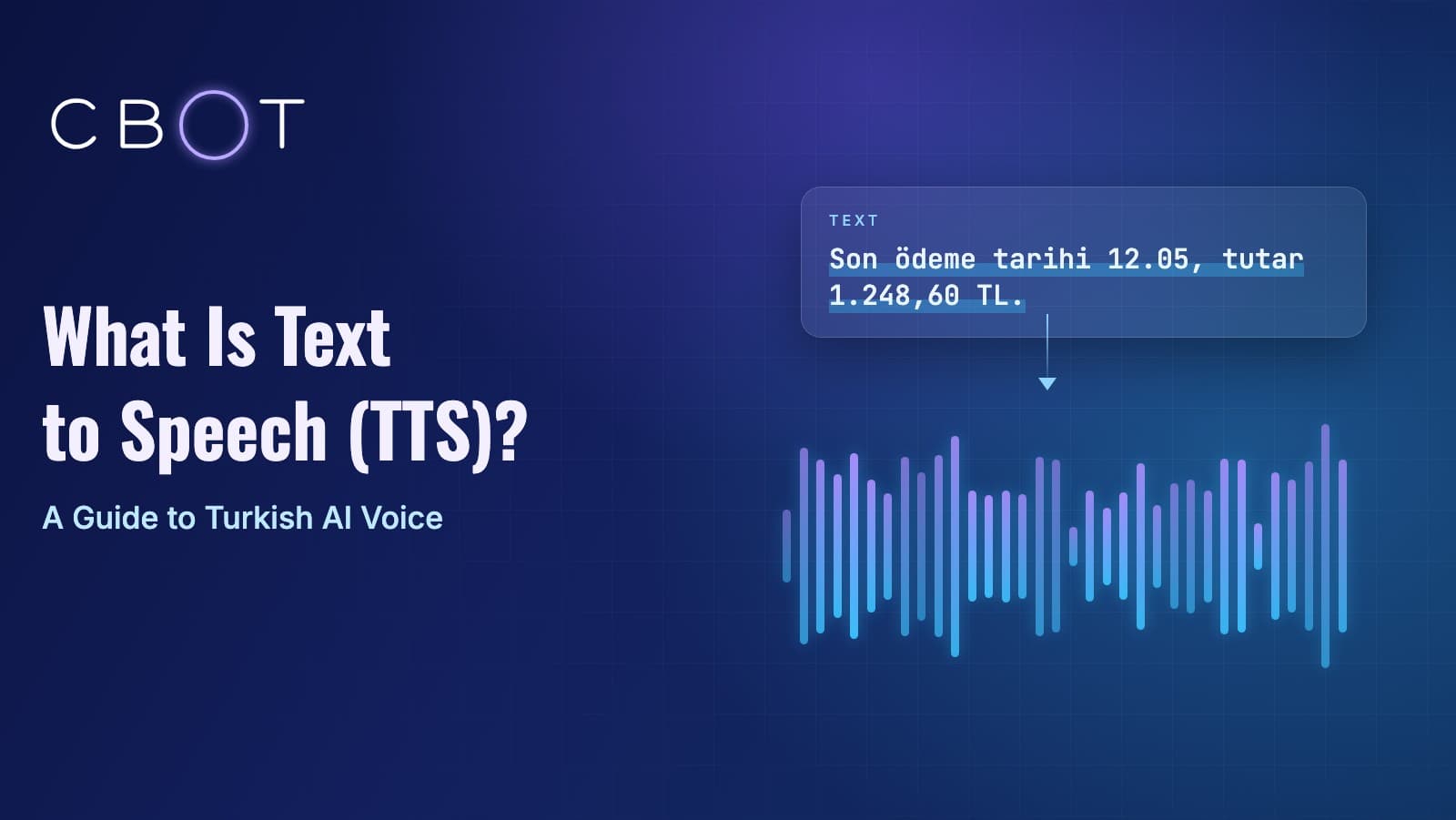
What Is Text to Speech (TTS)? A Guide to Turkish AI Voice
The question to ask before looking for the most natural voice: when your organization's voice reaches a customer, on whose behalf, with what accuracy and with what safeguards is it speaking?
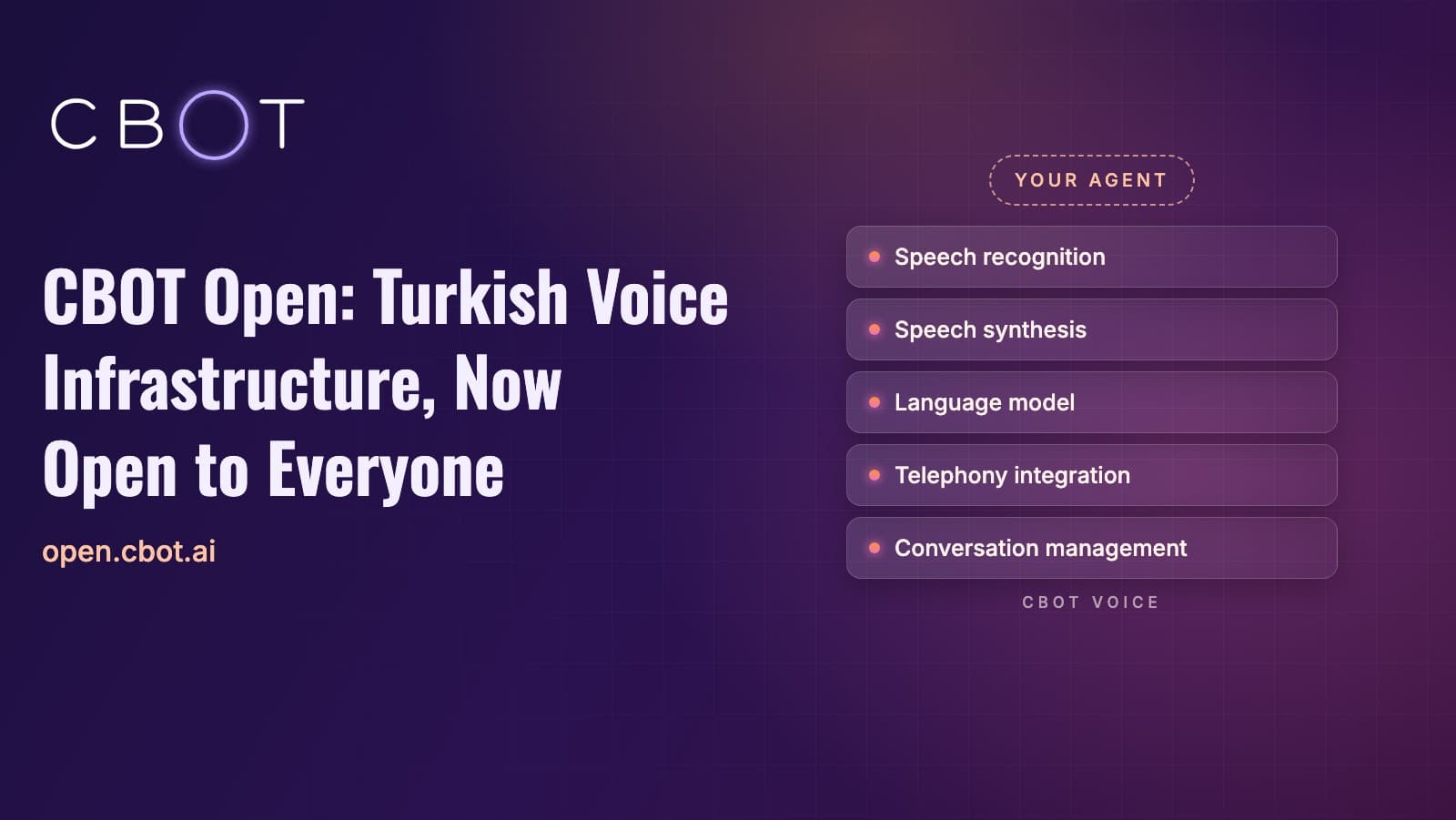
The Turkish voice infrastructure running at Türkiye's top organizations is now open to everyone
CBOT Voice brings speech recognition, speech synthesis, a language model, telephony integration and conversation management together on one platform. The infrastructure runs in Türkiye, priced in Turkish lira for the minutes you use.
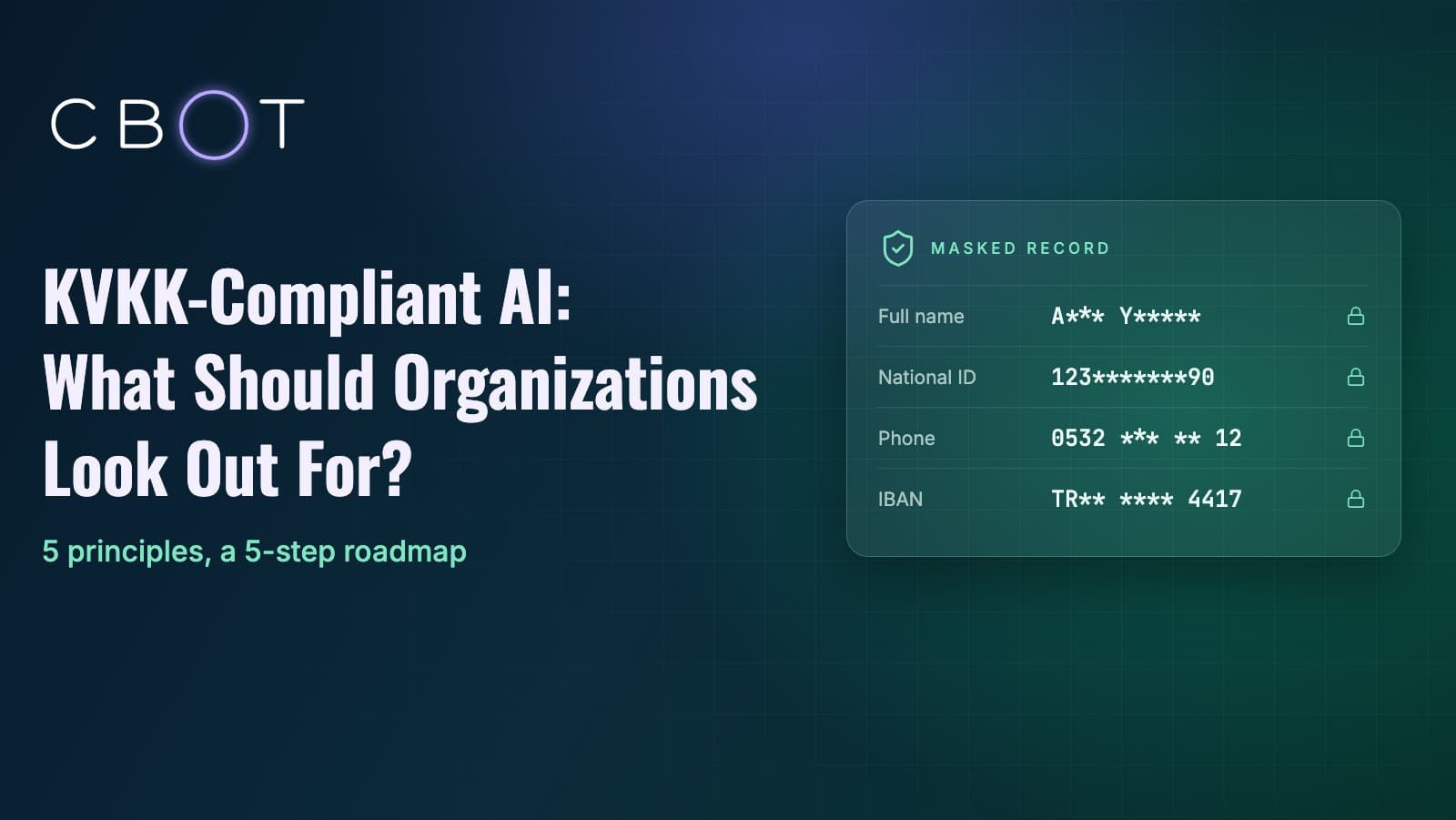
KVKK-Compliant AI: What Should Organizations Look Out For?
In generative AI, voice AI and chatbot projects, KVKK compliance should be addressed from the first day of design, not after the system is finished. Five core principles, a five-step roadmap and frequently asked questions for organizations.
TAHSİLDAR: A New Era in Collection Operations
Success in voice AI is not limited to delivering a natural, fluent conversation. The real value comes from handling the complexity of real operations, supporting business processes end to end and producing measurable results. With TAHSİLDAR, the voice digital employee we have built at CBOT, we approach collection processes from an operational perspective, not just a technological one. By bringing together years of sector experience, the voice technologies we have developed and the knowledge we have gained from real operations, we aim to deliver a secure, efficient and sustainable collection experience.
Silence Is an Answer Too
The invisible notes of conversation
Is Creativity About Creating or Choosing?
What made a shovel art?

Redesigning Organizations in the Age of AI
Will AI only make existing work faster, or will it require rethinking how the work is done? MIT's report offers three lessons for enterprises.
Not the Best Model, but the Most Suitable Model
In generative AI, the question is no longer which model is strongest but which job is routed to which model. Model routing, cost and enterprise model strategy.
Shadow AI Governance: Why Governed Access Is Winning
Visibility does not start with a ban. It starts with making the approved channel the easiest path.
How to Build an AI Architecture Ready for the AI Act and KVKK
Regulations Change, Architecture Remains
The New Capacity Layer for Organizations
For many years, an organization’s capacity was measured through indicators such as employee numbers, operating hours, service channels and transaction volumes. As demand increased, teams expanded. When a new channel was introduced, new operations were established. When service hours were extended, shifts were reorganized. Digital employees are changing this equation. Today, organizational capacity is determined
The New Priority of the Agentic Age: Trust, Not Capability
There has been a clear shift in enterprise AI conversations over the past year. No one is asking, “What is a digital worker?” anymore; everyone is asking, “What can I delegate to a digital worker, and to what extent?” As digital workers move beyond demo environments and become embedded in operations, the central issue is
The New Identity Card of Artificial Intelligence
Artificial intelligence no longer just answers questions. It connects to enterprise systems, accesses data, initiates transactions, and supports employees in decision-making processes. In this new era, companies need to focus not only on the technology itself, but also on the identity, authority, and scope of responsibility of digital employees. On a Monday morning, a customer
Not the Smartest Digital Employee, but the Most Adaptable System
Organizations often focus on individual capabilities when investing in digital employees: better comprehension, more accurate decision-making, and faster task completion. However, as the number of digital employees increases, the real issue is no longer simply how successful each one is individually, but how effectively they work together within the same process. When task allocation, context
The Productivity Paradox in Artificial Intelligence: Investment Is Increasing, but Where Is Value Being Created?
Every month in our newsletter, we share our observations on artificial intelligence, along with the signals we receive from the field. Last month, we touched on the research by Google and Ipsos: two-thirds of the global population now say they use an artificial intelligence tool. The conversations we had with different age groups during the
Every Conversation Is an Insight
For years, contact centers have carried the authentic voice of the customer. With GenAI, that voice is no longer just being heard; it is being interpreted, prioritized, and integrated into decision-making processes. At CBOT, we approach this transformation not from the perspective of “AI replacing humans,” but as an intelligence layer that empowers agents and
The World Has Updated Its Expectations. Have You Updated Yours?
A Global Inflection Point in AI Adoption A seismic shift has occurred in global artificial intelligence adoption. In 2023, people were exploring the technology out of curiosity; by 2024, they began to see its practical benefits; and by 2025, AI had become an integral part of daily life and workflows. Google and Ipsos’s third annual
Why can’t digital employees be managed only as an IT project?
Digital employee strategy now opens in many organizations as a technology discussion first. That instinct is understandable. The first decisions are usually about model choice, integrations, data access, and security. But once digital employees start entering real processes, the issue changes quickly. It stops being only a technical architecture question and becomes a question of
Why are digital employees becoming not just a new technology, but a new business model question for enterprises in 2026?
Digital employees are no longer just a new technology headline for large enterprises. They are now part of a direct business model discussion. The real question is which processes these structures take responsibility for and how that impact is measured. At CBOT, the pattern we have seen in recent years is clear. Institutions first evaluate
Beyond Efficiency: The Real Game Begins
The focus of AI investments is shifting rapidly. In the initial phase, the priority for organizations was to accelerate processes, reduce costs, and increase operational efficiency. Today, however, a more critical question is on the agenda of executive teams: Is the efficiency gained through AI being transformed into new business value and competitive advantage? In